14 Questions You Might Be Insecure To Ask About Cheap Espresso Machine


How to Choose a Cheap Espresso Machine
Making espresso requires water that is at the proper temperature and pressure to extract flavor from the ground coffee. A high-quality espresso machine that has these features could cost upwards of $5,000.
It is, however, possible to enjoy espresso on the budget. Here are some tips on choosing the best cheap espresso machine.
Cost
A good quality espresso maker isn't an inexpensive option for those keen to learn how to make espresso. Depending on the type of machine you select you can expect to spend up to $4,000. This includes a manual coffee grinder, an espresso maker and coffee beans. Pod or capsule machines are the most affordable, while semi-automatic and automatic espresso makers can cost you between $150-$500.
Choosing the right espresso machine is a matter of determining what you're looking for and want from your coffee-making experience. If you're a total beginner, consider a manual machine with an easy-to-use dial as well as a steam wand. You can play around with the settings and observe how they affect the taste. If you're a more experienced espresso drinker, a dual boiler model can allow you to prepare espresso and steamed milk in one go. This type of machine is typically more expensive than single boiler models.
When it comes down to the cost, you should take into consideration how often you make use of the espresso machine and the type of drinks you will be making. If you plan to make cappuccinos or lattes every day, it may be worth investing in an automatic steamer that can heat the water to a suitable temperature and then do the work for yourself. However, if you only take a cup of espresso once or twice every week, a manual machine might be a better option to cut down on time and effort.
The latest technology makes it possible for even least experienced espresso drinkers to enjoy the hobby. The Coffee Gator Stilosa, for example, is a great machine for quality and consistency for less than $500. It's one of our top budget espresso machines.
It's not equipped with the sophisticated features of our higher-priced espresso machines like the digital PID that controls water temperature and a high-quality steam wand, but it's an excellent entry-level machine. The Espresso Gator also heats up quickly, so you can start enjoying your coffee in just 10 minutes.
Capacity
If you're planning to make high-quality espresso at home, it is essential to choose a machine that has an effective pump and a steam wand. It should also come with a large water reservoir and a removable tank. These features will help you save time and effort while brewing your favourite coffee. Additionally, you should consider how often you'll use the machine. If you only need to make a quick espresso shot each month or once then a small, portable model might be sufficient. However, if you're planning to use the machine for events and other gatherings, a bigger model could be more suitable.
A good espresso machine will provide a powerful stream of hot water that can steam milk to create smooth foam that is creamy. It should also have a built-in thermometer that can ensure that the water is at the right temperature for brewing. This is especially important when you're making cappuccinos or lattes, which require more hot water.
Some espresso machines that are cheap offer an extremely high pressure, but it's not necessarily a good thing. Pressure that is too high can result in over-extraction and bitter espresso. The majority of espresso machines are rated for 9 bar of pressure and not higher.
The best cheap espresso machines offer high levels of control, consistency, and durability. These are crucial in a cafe setting where baristas are responsible for making hundreds of drinks per day. The most inexpensive machines aren't as reliable or stable as higher-end models, but they will still serve well for a long time if you follow maintenance guidelines.
For those who prefer the traditional, manual style of brewing espresso, the manual espresso maker could be a good option. For instance, the Wacaco Picopresso is small, hand-powered machine that makes use of a piston to generate the high levels of pressure needed for a perfect espresso. The Picopresso is available in a range of one to 18 cup sizes and can be used on nearly any stovetop, including ceramic or induction cooktops. It is also great for camping and traveling.
Design
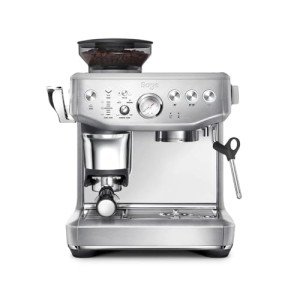
A basic espresso machine may not come with a lot of bells and whistles, but it should be able to make decent shots. The major differences between less expensive and more expensive machines are usually the temperature stability (or consistency) and convenience features.
Many espresso makers combine pressure and heat in order to extract espresso from the coffee beans. Most espresso machines are designed to operate at a pressure of 8 and 15 bar. The pressure is generated by the steaming hot water that fills the boiler. The higher the pressure, the more intense the extraction. A high-quality espresso maker should be able to consistently deliver this level of pressure.
Easy to use and maintainability is another crucial aspect when choosing a cheap coffee machine. The design of an Espresso machine can affect the ease or difficulty it is to clean and operate. For instance certain machines have removable parts that can be machine-washed. This makes cleaning much easier than if it were one machine.
Other machines require more effort to clean and operate. For instance, certain machines might require manually flushed with hot water to clear out any remaining residue. This is especially the case for older espresso machines. The design of an espresso machine may also affect the ease of refill the water reservoir and how quickly the machine can be heated up.
A good cheap espresso machine is one that has a user-friendly interface and sufficient features to satisfy the needs of the majority of users. It should also be simple to maintain and repair. A lot of espresso machines that are budget-friendly come with a manual to help users solve problems.
In our review, we looked for espresso machines with many features and settings. We wanted to find a machine that would be appealing to both novice and experienced espresso drinkers. We also looked at the price and whether it had an integrated grinder.
We tried a prosumer model made by Lelit which is currently owned by Breville. This type of machine is sometimes referred to as a semi-professional espresso maker, and is in essence a scaled-down version of the most sought-after commercial espresso machines. The Pro X is powerful and stylish, but not as precise as other models we tested.
The following are a few examples of
There are lots of doodads, nick-knacks and other things to think about when shopping for an espresso machine. It can be difficult to determine which features are the most important, especially if you're spending hundreds of dollars. Begin by deciding the frequency you'll make use of the machine.
Generally speaking, more frequent use means you'll need a machine with the most robust construction. This is due to the fact that continuous drinking can lead to mineral buildup, which could cause the steam wand and water pump to wear down more quickly than it normally. This is the reason that most espresso machines on the market are constructed using lower-quality materials, to reduce the risk of such problems.
Another feature to consider is whether you'd like an automatic or manual machine. The manual machine is more difficult for novices to operate. Learn Additional Here have two boilers that can brew and steam at the same time which is helpful to make cappuccinos and lattes. They can be difficult to operate and require more maintenance.
Manual espresso makers, such as the De'Longhi Stilosa are a great option for espresso lovers on a budget. It includes a pressurized container for pre-ground coffee, and an ordinary basket that can be made bottomless. It has a removable portafilter that is easy to clean and has a user-friendly interface.
One disadvantage is that it doesn't include the steam gauge, however in the event that you don't drink enough milk-based drinks to justify the cost of a separate steamer it shouldn't be a major concern. It's also noisy, but it's nevertheless less expensive than other models in this class.
The Nespresso Essenza Mini is a solid espresso machine for the price. It's a jack of all trades, able to make both espresso and non-espresso coffee in sizes that range from 0.84 to 1.35 fluid ounces. It's not the strongest of espresso machines, however it is an efficient and reliable model that will last for many years. It comes with a powerful steam wand, however that could also be an issue for certain users.